The northern part is now called Nyerere National Park, which means that hunting and human activity are prohibited. This is a safari experience where the flora and fauna are untouched and wild. The reserve varies between savannah and plains. The Rufiji River is the artery of life in this area, and also feeds the various watering holes.
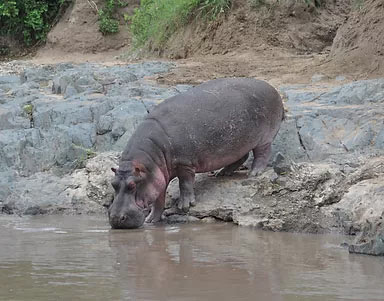
Along the river, it’s common to see hippos, crocodiles, antelopes and Guereza colobus. It’s an excellent wildlife spot, especially during the dry season. Tiger fish and catfish are equipped with primitive lungs to survive out of water, moving short distances from pond to pond waiting for rain. It’s an astonishing sight.
Nyerere National Park is home to a large population of wild dogs, the 3rd largest in the world. Their need to roam vast areas and their formidable hunting skills have led to many of them being shot by herders, but here in Nyerere they find sufficient space to avoid such a confrontation. Elephants are also plentiful here: the last census estimated their population at 64,400, one of the largest in Tanzania.